School of Information and Communication Technology
The School of Information and Communication Technology provides education and training in information systems, computer studies, programming, databases, networks, and computer science. The school supports students to develop practical ICT knowledge, technical skills, problem-solving ability, and professional readiness for Tonga and the wider region.
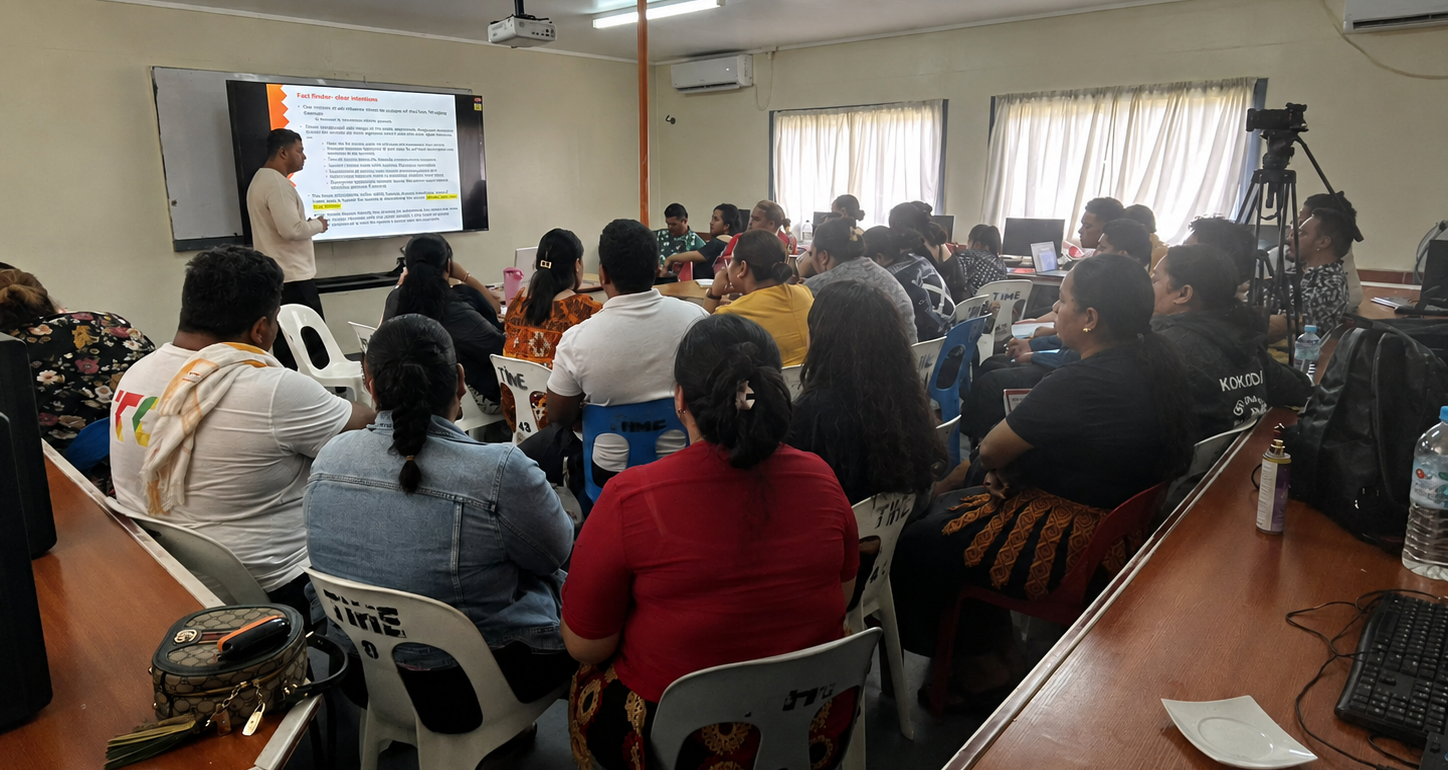
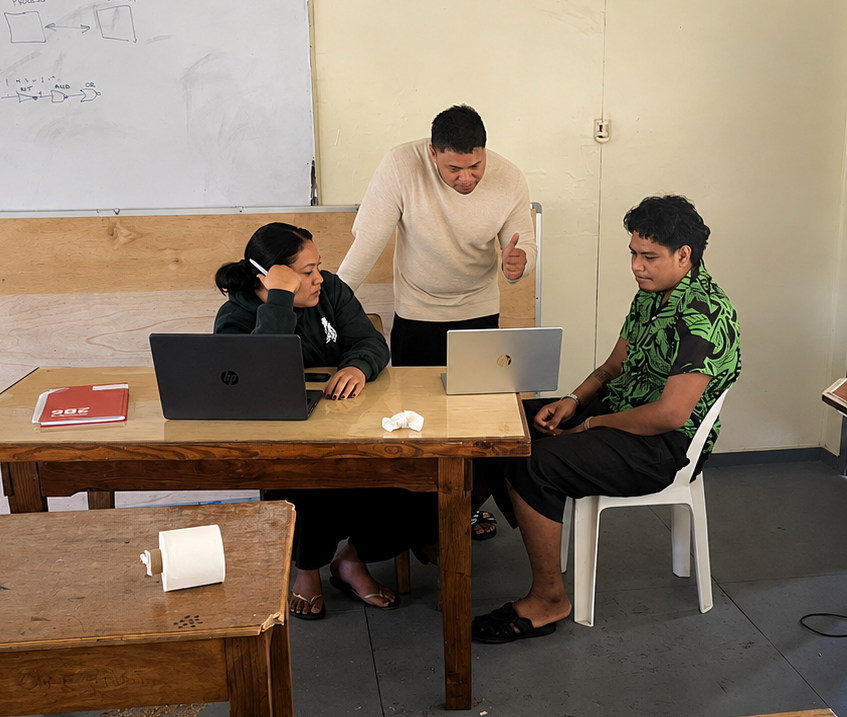

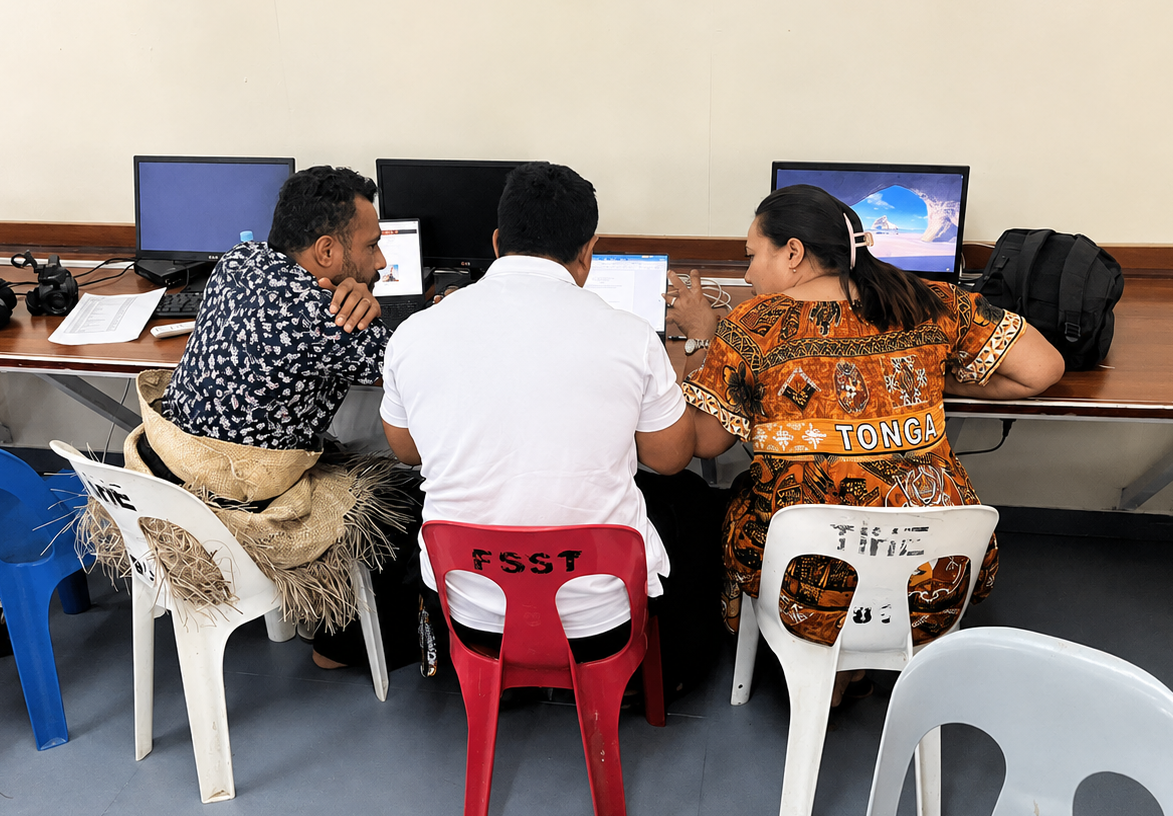
The School of Information and Communication Technology is one of the four schools within the Faculty of Science and Technology. It delivers four programmes designed to prepare students for further study and careers in information technology, information systems, computer programming, database systems, and computer science.
Programmes Offered
Click each programme below to view the programme statement, course structure and entry requirements.
1. Certificate in Information Systems
Program Statement
This programme provides an introduction to information systems, including their components, design, and construction in commercial, scientific, and governmental enterprises. It also introduces students to the physical and logical characteristics of processors and storage, characteristics of networks, data types and their representations, and the specification of information systems.
Courses and Descriptions
The course structure below is arranged by semester. The semester column is merged to keep the table compact and easy to read.
| Semester | Code | Course Name | Description |
|---|---|---|---|
| Semester 1 | IT131 Both IS & CS |
Mathematics for Science | Designs to help students acquire basic knowledge and understanding of the concepts and skills within the divisions of mathematics which are demanded in Information Technology. The course covers mathematics, algebra and introduction to calculus. |
| IT141 Both IS & CS |
Information System 1 | Introduces students to the design and construction of information systems in commercial, scientific and governmental enterprises. Students develop an operational understanding of available software tools such as word processing, spreadsheets, databases, internet, news and email. | |
| IT161 | Professional Communication | Designs to develop students’ abilities to communicate positively and effectively, both orally and in written form, in their working environment. | |
| Semester 2 | IT133 Both IS & CS |
Introductory Statistics | Describes descriptive statistics, sample spaces, events, probability measures, independent events, binomial distribution, normal distribution, sampling distributions, hypothesis testing, estimation, confidence intervals, goodness of fit, contingency tables, covariance, simple regression and applications. |
| IT142 Both IS & CS |
Introduction to Programming: Visual Basic.Net | Introduces students to fundamental concepts of program design using Visual Basic.Net. It emphasises the design process, producing elegant, well documented and maintainable programmes, and introduces elements of object-oriented programming. | |
| IT162 | IT Research Project | Develops key skills in basic research that enable students to conduct basic research tasks in the workforce and prepare for further academic study. |
Entry Requirements
Admission is available to applicants who have satisfied at least one of the following requirements:
- Completed Form 6 with a total grade of 15 or less in English, ICT, Mathematics, and another subject.
- Candidates must have taken ICT Form 6 and Mathematics.
- Completion of Form 7 ICT plus Mathematics with Statistics and Calculus is advantageous.
- At least 5 years of relevant computer working experience that indicates likely success in the programme.
2. Diploma in Information Systems
Program Statement
This programme is an extension of the Certificate in Information Systems. It explores database management systems, file processing, data models, query languages, recovery and concurrency, security and integrity, the development of databases using a relational model, and the use of object-oriented programming languages.
Courses and Descriptions
The course structure below is arranged by semester with merged semester cells.
| Semester | Code | Course Name | Description |
|---|---|---|---|
| Semester 1 | IT233 Both IS & CS |
Applied Statistics | Examines important tools for critical thinking, decision making under uncertainty, and quantitative data analysis, and applies them in Information Technology decision situations. |
| IT244 Both IS & CS |
Database Management Systems | Examines database management systems, file processing, data models, query languages, recovery and concurrency, security and integrity, and database development using a relational database model. | |
| IT262 | Principles of Management | Introduces important management concepts and theories, covering basic management functions and practical issues. It supports the development of human, interpersonal and group skills through participatory learning. | |
| WS200 Both IS & CS |
Working and Social Skills | Provides the appropriate working and social skills for workplaces. | |
| Semester 2 | IT235 Both IS & CS |
Discrete Mathematics | Introduces students to the mathematics of modern computer science, especially discrete mathematics, combinatorics and graph theory. It supports understanding of algorithms used by computer programmers. |
| IT245 | Management Information System | Explores information systems, systems analysis, design, evaluation and implementation of business systems, internal control, control systems, computer-based information systems, and the uses and potential of information systems. | |
| IT256 Both IS & CS |
Advanced Programming: Visual Basic.Net | Develops understanding of object-oriented programming and further develops students’ programming skills and knowledge in Visual Basic.Net using a visual programming environment. |
Entry Requirements
Admission is available to applicants who have satisfied at least one of the following requirements:
- Completed Form 6 with a total grade of 15 or less in English, ICT, Mathematics, and another subject.
- Candidates must have taken ICT Form 6 and Mathematics.
- Completion of Form 7 ICT plus Mathematics with Statistics and Calculus is advantageous.
- At least 5 years of relevant computer working experience that indicates likely success in the programme.
3. Certificate in Computer Studies
Program Statement
This programme introduces students to data structures and algorithms. It develops their basic understanding of Object-Oriented Programming and knowledge of Visual Basic.Net using a visual programming environment. It also provides students with a range of skills required to become capable computer programmers.
Courses and Descriptions
The course structure below is arranged by semester with merged semester cells.
| Semester | Code | Course Name | Description |
|---|---|---|---|
| Semester 1 | IT131 | Mathematics for Science | Designs to help students acquire basic knowledge and understanding of mathematical concepts and skills required in Information Technology, including mathematics, algebra and introduction to calculus. |
| IT141 | Information System 1 | Introduces the design and construction of information systems in commercial, scientific and governmental enterprises, including processors, storage, networks, data types, representations and system specification. | |
| IT151 | Introduction to Programming - Java | Introduces fundamental concepts of program design using Java. Students design, code, test, debug and document Java programs using good programming style, while learning elements of object-oriented programming. | |
| Semester 2 | IT133 | Introductory Statistics | Examines descriptive statistics, probability, distributions, hypothesis testing, estimation, confidence intervals, contingency tables, covariance, simple regression and related statistical applications. |
| IT142 | Introduction to Programming: Visual Basic.Net | Introduces fundamental concepts of program design using Visual Basic.Net, with emphasis on structured design, documentation, maintainability and elements of object-oriented programming. | |
| IT152 | Data Structure and Algorithms | Introduces data structures and algorithms used in computer programming, including arrays, sorting, stacks, queues, linked lists, iteration, recursion, binary trees and hash tables. |
Entry Requirements
Admission is available to applicants who have satisfied at least one of the following requirements:
- Completed Form 6 with a total grade of 15 or less in English, ICT, Mathematics, and another subject.
- Candidates must have taken ICT Form 6 and Mathematics.
- Completion of Form 7 ICT plus Mathematics with Statistics and Calculus is advantageous.
- At least 5 years of relevant computer working experience that indicates likely success in the programme.
4. Diploma in Computer Science
Program Statement
This programme is a natural extension of the Certificate in Computer Studies. It aims to consolidate and extend students’ knowledge, skills, and work as computer programmers. Students have the opportunity to study classical algorithms for solving real-world problems through programmatic techniques and asymptotic analysis. Critical thinking skills are developed by using different techniques to solve new problems.
Courses and Descriptions
The course structure below is arranged by semester with merged semester cells.
| Semester | Code | Course Name | Description |
|---|---|---|---|
| Semester 1 | IT233 | Applied Statistics | Examines tools for critical thinking, decision making under uncertainty and quantitative data analysis, and applies them in Information Technology decision situations. |
| IT244 | Database Management Systems | Examines database management systems, file processing, data models, query languages, recovery and concurrency, security and integrity, and database development using a relational database model. | |
| IT253 | Computer Organization | Develops knowledge of computer organisation for people who design programmes or need in-depth knowledge of computer systems. It provides a general foundation for further specialised study. | |
| WS200 | Working and Social Skills | Provides students with appropriate working and social skills for workplaces. | |
| Semester 2 | IT235 | Discrete Mathematics | Introduces the mathematics of modern computer science, especially discrete mathematics, combinatorics and graph theory, supporting understanding of algorithms used by computer programmers. |
| IT254 | Design and Analysis of Algorithms | Studies classical algorithms for solving real-world problems in terms of programmatic technique and asymptotic analysis. Critical thinking skills are developed through using different techniques to solve new problems. | |
| IT256 | Advanced Programming: Visual Basic.Net | Introduces students to object-oriented programming and further develops their programming skills and knowledge in Visual Basic.Net using a visual programming environment. |
Entry Requirements
Admission is available to applicants who have satisfied at least one of the following requirements:
- Completed Form 6 with a total grade of 15 or less in English, ICT, Mathematics, and another subject.
- Candidates must have taken ICT Form 6 and Mathematics.
- Completion of Form 7 ICT plus Mathematics with Statistics and Calculus is advantageous.
- At least 5 years of relevant computer working experience that indicates likely success in the programme.
Build Skills for ICT Careers
Explore programmes in information systems and computer science designed to develop practical skills in programming, databases, networks, research, mathematics, statistics and workplace readiness.